
Walkley Primary School
Enjoyment, Achievement and Learning for Life
Walkley Primary School
Walkley Primary School Burnaby Crescent Sheffield S6 2RZ
Telephone:
Email:
Attendance
Walkley Primary School - Attendance Ethos
Attend More, Enjoy More, Achieve More!
Walkley Primary promotes a whole school culture that values attendance. We know that excellent attendance can improve outcomes for a child. We provide a supportive, calm orderly and productive environment for children to attend, learn and develop within. Expected attendance at Walkley Primary School is 97% and above.
Why is attendance Important?
Every child has a right to education, every parent has a responsibility to support this and every school has a duty to promote and encourage this. Excellent attendance at school helps a child to meet their full potential.
Below are just some of the reasons why it is so important for children to attend school:
- To learn
- To have fun
- To make new friends and learn social skills
- To have new experiences
- To develop skills (for example; problem solving and time keeping skills)
- To build confidence and self-esteem
- To get into daily routines that set a pattern for life
- To receive support from school
Every lesson Matters
Every lesson is an opportunity to learn and develop. Each lesson has its own learning goals and provides a chance to learn something new and gain a new experience. Many lessons follow ongoing schemes of work and missing one can mean a child may miss out.
The Legal Requirement
Please see the attached sheet which outlines the DFE Working Together to Improve Attendance 2026 Legal Requirements (Absence fines procedure).
Walkley Primary School is required by law, to record and monitor the attendance of every child on roll and to show who is absent or late. Figures for attendance and for authorised absence and unauthorised absence are monitored by Sheffield City Council. We have authority to authorise and unauthorise absences and to consider actions where attendance is below expected standards. Under DFE 2024 guidelines, we must consider fines for ongoing absence (10 sessions in 10 weeks) and any term-time leave.
Parental Role in Attendance
Where parents decide to have their child registered at school, they have a legal responsibility to ensure that their child attends. This means their child must attend school every day that the school is open, unless there is a specific reason for absence which the school has been informed of. Although not enforceable, we expect that this is the case for all children in school. We uphold the same expectations of excellent attendance for those children in the nursery and reception who are below statutory school age.
Parents have a responsibility to:
- Encourage and promote the school value of attendance.
- Ensure your child arrives at school on time.
- Inform school of the reasons for a child’s absence.
- Call every day of any absence giving information on the reasons for absence. If you leave a voicemail message, you will then receive a follow-up call from the school. School can then choose to authorise this absence or not.
- Inform school of Term Time leave (Term Time Leave form prior to leave).
How You Can Help and Support At Home
- Establishing a good routine. This can involve getting ready the night before and morning and preparing your child for the school day ahead.
- Talk to your child about school and encourage the importance of school. Remind your child they can learn, see friends and have fun in school.
- Ensure your child attends every day from the first day they start. They may start in the nursery or reception and attendance is as important in these classes as in any other. From the day they start school you should get your child into a routine of excellent school attendance.
- Arrange dental and medical appointments outside school hours. Most dentists and GPs in Sheffield are signed up to the Sheffield Attendance Charter wherein they have a duty to offer appointments outside of school hours, where possible. If your child does have an appointment during school hours, they are expected, where possible, to attend before the appointment or return to school once the appointment is completed. This means they can still receive one of their attendance marks (am or pm).
- Inform the school office at the earliest point if you are considering leaving school. For example, moving schools, home-schooling, leaving the UK etc. They will advise you on the next steps.
- Contact school with any issues that you feel will affect your child’s attendance. For example, if your child has an issue in school (related to learning, friendship or emotional concern), please contact the school at the earliest opportunity to discuss this. Please note: An issue with learning or friendship will not be accepted as an authorised reason for a child’s absence. Most issues can be easily addressed, and your child should not be absent whilst they are resolved. We expect that you will bring your child to school to work through the issues with school's support. Keeping your child absent from school leads to further complications. The teaching and learning team and Inclusion and safeguarding team are in place to help support and attend to any concerns as they arise.
Punctuality
Learning starts from the moment the children enter the door at the school. When children arrive late it is unsettling for both the child, teacher and the class. The teacher has to stop the lesson and ensure the child is settled in. Therefore, the class can be disrupted. The latecomer misses the first part of the lesson and misses out on important learning. Children feel uncomfortable and less settled if they are late and this does not support their learning and emotional well-being.
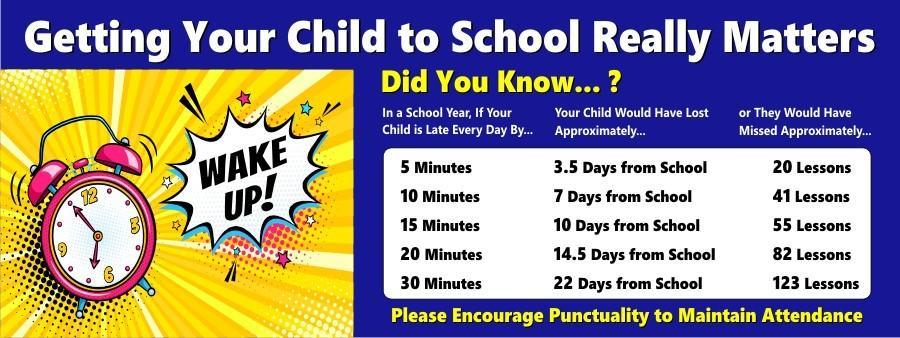
Support for Issues with Punctuality
Walkley run a Breakfast club and attending this club can help if your child is struggling with a morning routine. They offer a breakfast and play activities. You can apply for a place via the school office. We will work with families in need or provision. Walkley's Inclusion team can also make referrals with families to the Family Intervention Service to request support.
Response to Absence: “The Three W’s” – What you can do and expect if your child is absent
Follow up on your child’s absence can be expected for all classes in school including the nursery and reception class. We need to know where your child is everyday.
Parents should call every day of any absence. If you leave a voicemail message you will then receive a follow up call from the school. The office will follow The three “W’s strategy and ask for the following information:
- Why: The reasons for absence
- What: What treatment or advice has been sought to address the issue.
- When: The expected date of return to school.
The information you provide will be recorded on SIMS to explain the absence and a code will be issued. School will consider and authorise each absence or not. Where there is insufficient evidence, or we do not agree that this warrants an absence, then it is unauthorised. Where a child is at persistent absence levels (below 90%), or there is a pattern of absence, we will not authorise the absence unless sufficient evidence is shared.
Persistent Absence (90% and below)
Where a child is at persistent absence levels (attendance percentage below 90%) the following takes place:
- The school will inform the parents that their child is at persistent absence levels and send a copy of their child’s attendance registration certificate to them.
- The school informs the parents that we will exercise caution in authorising any further absences and will ask parents to provide any evidence and information they have to support any absences for illness.
- There will be an expectation that in most cases absences will be unauthorised (an O code) unless a high threshold of evidence is met.
- School will monitor the child’s attendance on a daily basis and look for patterns of absence.
- If there is no improvement in attendance, parents will be invited to attend a meeting at school. In this meeting, school will make clear the expectations for improved attendance. A mapping plan will be written that considers and plans to reduce barriers to attendance. The support and next steps for both school and family to improve attendance will be agreed.
- Attendance will continue to be monitored, and review meetings will be arranged with parents. The attendance mapping plan will be reviewed considering the reasons for ongoing absence and the support in place to improve attendance.
- The child’s name will be automatically flagged up to the Local Authority Attendance link and their attendance will be discussed with them in improvement meetings outlining next steps for the school and parents.
If you do not call to explain the reason for the absence, or if we do not receive the requested further information, the absence will be automatically unauthorised.
In the case of any unexplained absence, or where there has not been sufficient information provided in regard to the absence, the office will explore further options and advise the safeguarding and inclusion team. The Inclusion team will contact you and/or a home visit will be carried out to check that the child is “safe and well." Repeated unexplained absence with no contact is a safeguarding concern and the school can make a referral to the Sheffield Safeguarding Hub.
Unauthorised absences are a significant concern and the school monitors these closely. As the attached paperwork explains where there are 10 unauthorised absences in 10 weeks, the school can consider discussion with the Local Authority and taking steps towards a fixed penalty.
Term Time Leave
Click here for the Sheffield Local Authority Term Time Leave Policy.
Any child who is absent from school due to a holiday will miss out on important learning and school experiences. The Department for Education Working Together to Improve Attendance guidance 2024 is clear that Parents should not take their children on holidays during term time. In each school year there are a maximum of 190 statutory school days – this allows time for holidays to be arranged outside of term time.
If you are planning to take your child out of school during term time, including training or “Inset” days, you must collect, complete and return a term time leave form to the school office as far in advance as possible of the requested absence. The form is not an application for leave to be authorised; it is a document informing the school why the child is absent.
Under the 2024 legislation, headteachers are advised not to authorise term time leave unless, under absolutely exceptional circumstances with evidence provided.
From September 2024 at Walkley, Term Time leave will be unauthorised and in the majority of cases where 5 consecutive days of leave have been taken, including training or “inset” days, a fine will be issued per parent, per child.
The costs of the penalty fines are in the included information sheet. We strongly recommend that you do not book holidays in term time, but would suggest that you consider these costs when you are booking any term-time leave. In line with DFE policy, Walkley will monitor a family’s term time leave taken, and if further leave is taken within three years, a further increased fine will be issued. At the point of the third term time leave, within three years, the case will be taken for court action.
If school suspects that you are taking term time leave (by way of word of mouth, or home visits, or the timing of the absence), we may challenge and ask for evidence that term time leave is not being taken. If you cannot provide evidence, then a Penalty Notice will be issued.
Attendance Rewards
Success in improved attendance and punctuality will be talked about in classes and across school. All staff will recognise the patterns in improvement across the school and acknowledge them.
We will celebrate achievements in attendance in our weekly Friday assembly with parents.
We have carefully reviewed our awards to ensure that they are fair and represent the effort that families are making to ensure excellent attendance.
The awards are given following close monitoring of the register (attendance and punctuality) by the Inclusion Manager and Senior Leadership Team. We look for patterns in improved attendance. This could involve improved punctuality for one child within a class. It could be improved attendance for identified pupils within a class. This method is more precise than a simple award for highest attendance. It offers the opportunity for any class to win each week.
In Key Stage one, we award a class with two soft toys. Tocky the time Ted and Rainbow the Register Rabbit.
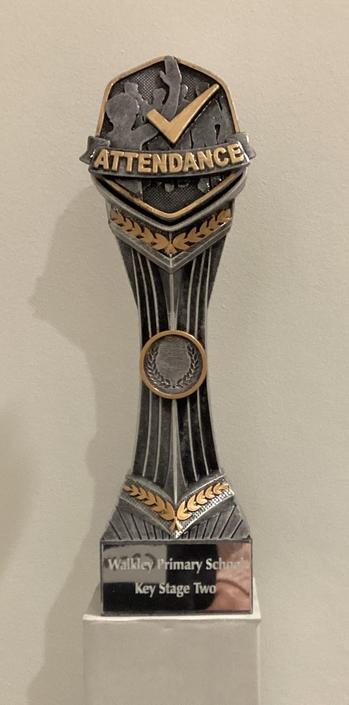
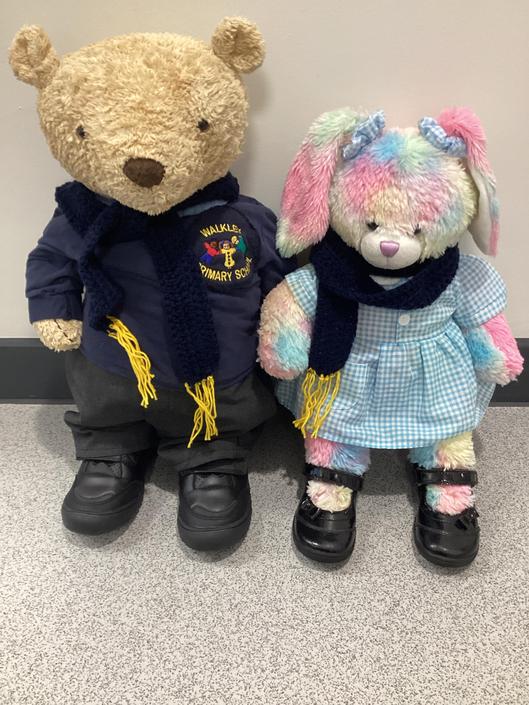 These soft toys wear the Walkley uniform with pride and represent the school ethos in excellence in attendance and punctuality. In Key Stage two we award a special attendance trophy.
At each Golden Assembly, one class in EYFS or Key stage one will have the opportunity to win the soft toys in their classroom for the fortnight. They join the class to celebrate the success of the pupils. In Key stage two, the chosen class will be awarded the trophy. This is placed in a prominent place to celebrate their success.
The awards will be referred to throughout the week by the class teachers, demonstrating their importance and praising their class.
Attendance Interventions, Follow up and Support
We are aware that there can be barriers to attendance and punctuality. We listen to these, and we expect to work with families to overcome them to improve attendance. These interventions can be informal or formal. For example, nudge letters, informal meetings, formal meetings, formal letters and formal attendance plan and fines. The Authority will advise on these and where concerns are significant the local authority link worker may request to be present.
For families where attendance is an ongoing concern, a meeting with the Designated Safeguarding Lead / Inclusion Manager, Mrs Homer, will be arranged with parents. Within this meeting we discuss the barriers to attendance, expected actions and improvements to be made. Packages of support can be put together by teachers, the attendance team and SENDCo.
At Walkley we are creative in our responses. All staff are trained in Trauma Informed Responses to children and our experienced Inclusion team can guide them and support in a range of ways. We are informed by our training in solution-focused work and also by our links to outside agencies such as Family Intervention Service and the Local Authority Attendance Support Team.
Support can include:
- Ongoing meetings with parents gathering parent voice-recorded in a mapping plan.
- Direct work with a child gathering their voice using EBSNA (Emotion Based School Avoidance or Non Attendance) techniques.
- Offer and plan to administer medication in school.
- A medical care plan in place to support the child’s medical needs in school.
- An Emotional Based school avoidance plan identifying the barriers and the planned support for the child.
- A referral to Early Help – Family Intervention Service (FIS) for family support to help with routines (with agreement of parents).
- Where issues are linked with SEND, seeking advice from school SENDCo Mrs Bazeley and from outside agencies (Autism ASCETS team, Education Psychology Service Ryegate, Lead Locality SENDCo) with agreement from parents.
- Meet and greet a child and parent at the door – this can be daily with a chosen trusted adult.
- Rewards for daily attendance (stickers etc.).
- Rewards for weekly improvement in attendance (choice of activity – football time, sand time)
- Use of an attachment object to help support the transition between home and school.
- Use of Social Stories to help name and address concerns about transition.
- Use of resources – visual timetables and now and next to support at school and at home.
The Inclusion Team are:
Toni Homer - DSL Inclusion Lead
Matt Clements - Learning Mentor
Jesse Lasonder - Pupil Behaviour Assistant
Janet Bazeley - Special Educational Needs and Disabilities Coordinator
Teachers and the Inclusion Team can be contacted via the school office on 0114 234 0550 or email enquiries@walkley.sheffield.sch.uk for the attention of the child's teacher and/or Inclusion Team. Staff are also on the school yard at the start and end of school to greet children and their families and attend to any queries.