- Home
- Home
- Class Pages Archive
- Y6 - Kensukes and The Potters 2020/21
- Home Learning
- Writing
- Week Beginning 25th January 2021
Week Beginning 25th January 2021
25.01.21 -Monday
Hello Year 6! It’s Miss Stephens that will be planning your literacy this week!
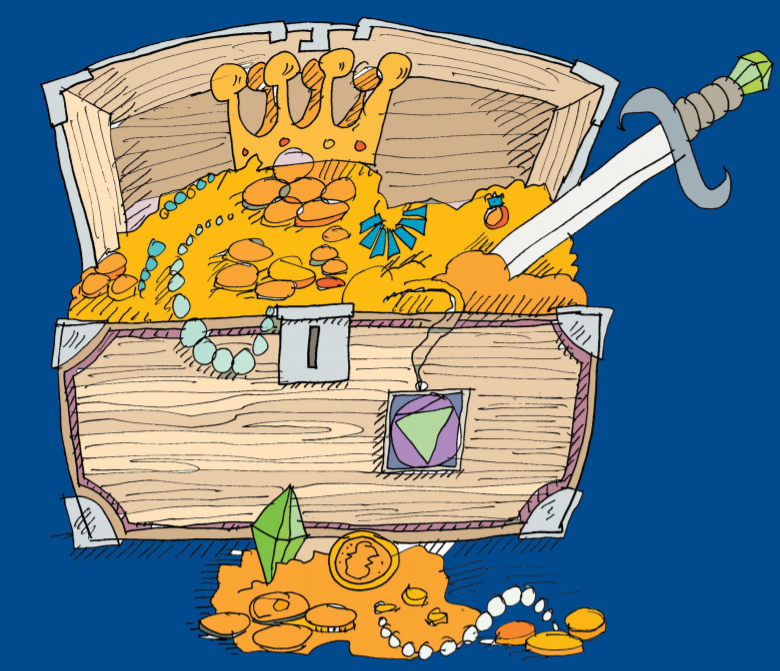
Watch the short video clip below for some writing inspiration!
Imagine stumbling across hidden treasure the next time you are out on the beach or in the wood with your friends. What would you do? Open the treasure chest? Keep it all to yourself? Hand it to the police? Show it to your family? I think we have all thought about this!
Task
Write what you would do if you found hidden treasure. Make sure to describe it!
MONDAY REMEMBER TOS
WOW! Some great writing!! A new week, a new text and some fabulous writing to start it all off!! Just a reminder to make sure you describe the treasure.
-

WOW SA! This is a great prologue! Love the descriptions and punctuation used!
-

Great vocabulary and time adverbials used!
-

Wow HH! Great vocabulary and use of ellipsis! Your handwriting is neat too.
-

Good work KP! A very honest response!
-

WOW JS! I love that you wrote this as a diary! Good descriptions and rhetorical questions!
-

WOW AS! Great description! I could picture your story! I like the vocabulary used too.
-

JB - good use of time adverbials and description of the treasure!
-

Very thoughtful and selfless of you OA!
-

Well done IL! I like the description of first finding the buried treasure!
-

Good time adverbials used OS!
-

WOW EMF! What great ideas! Good descriptions of the sandcastle.
-

XS that is very honest of you.
-

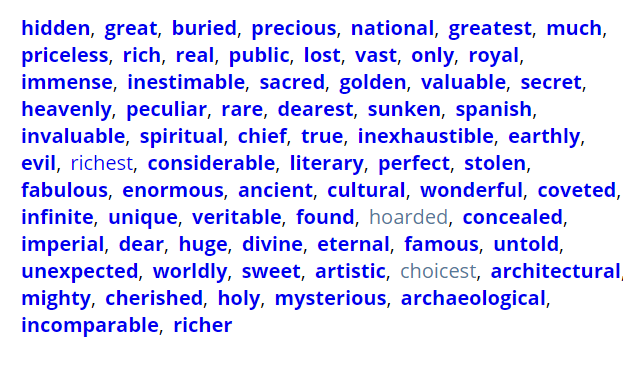
XS, great vocabulary to describe the treasure! I may have to use this word list myself!


Great work girls! HC - A couple of good ideas about what to do with the treasure! EW- Great description of the treasure and interesting characters in your short story!
26/01/21 - Tuesday
Have a read of the story attached below. As you are reading you can highlight or underline any key words/phrases or events. As well, any unknown words you will need to look up the meaning of.
Task
You will be answering comprehension questions about the story.
They are attached below with the remember to.
(There is also a link to a quiz if you'd rather do some of today's task this way)
Text & remembers tos & questions
Amazing literacy work! I love how you all are highlighting and underlining the text to help you! Great understanding of this story!
-

DB- fantastic understanding! Good use of the text!
-

XS-good use of highlighting key words and phrases!
-

XS
-

XS
-

AG - Great understanding of the text. The person telling the text is a narrator!
-

IL- good job at highlighting key words!
-

JB-Fantastic understanding of the story!
-

IL
-

EMF - great understanding of the story. Naive means young and inexperienced.
-

OS- A well explained opinion!
-

AS- Good understanding of the text!
-

KP-Good understanding of the text. Since the story is in 3rd person it is a narrator.
-

SA- Good understanding of the text.


Good understanding of the text EW!
HC - Well done for highlighting the key words and phrases.
RB- Great understanding of the story!
Well done to AT, DB, EW, IS, RB, TS, XS, IL and Y6 bubble for doing the quiz today! Great understandings of the story! Well done to all!
27.01.21 -Wednesday
Before we get started today, well done to all of you for reading the story, highlighting it, sending work and completing the quiz from yesterday! WELL DONE!
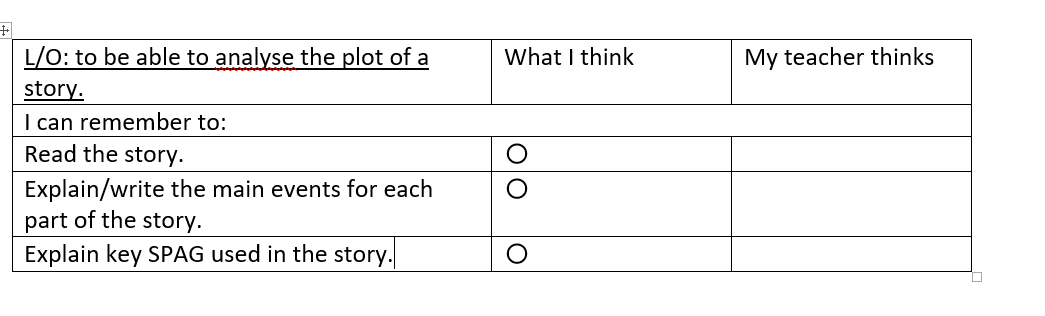
Today's remember to:
The story that we have read is called a “rags to riches tale.” It generally follows this outline:
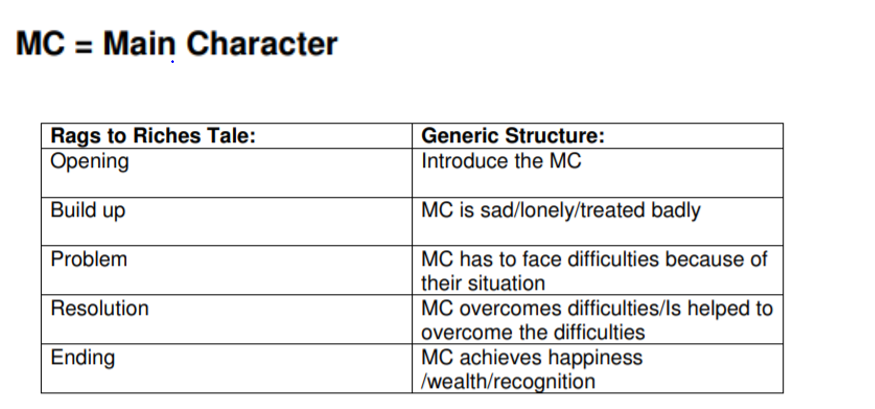
Today, we are going to investigate whether our story (Stanley and the Magical Map) follows this structure. We will be analysing the main events and summarising main events. For a challenge (level 3) we can also analyse the SPAG they use at different parts of the story.
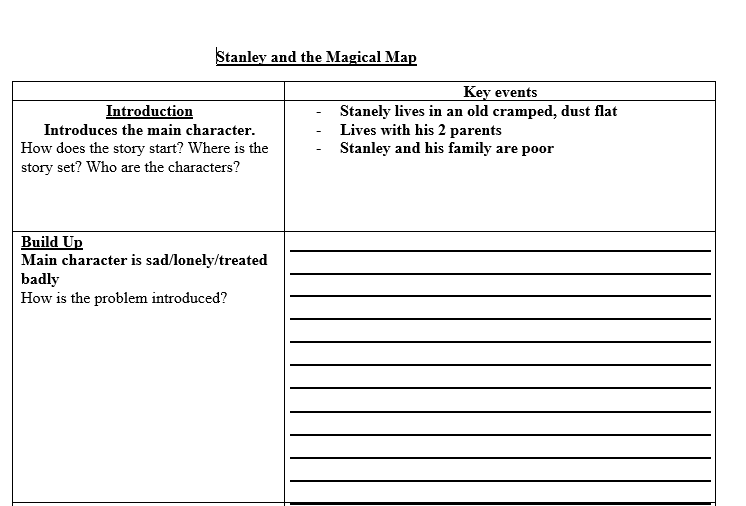
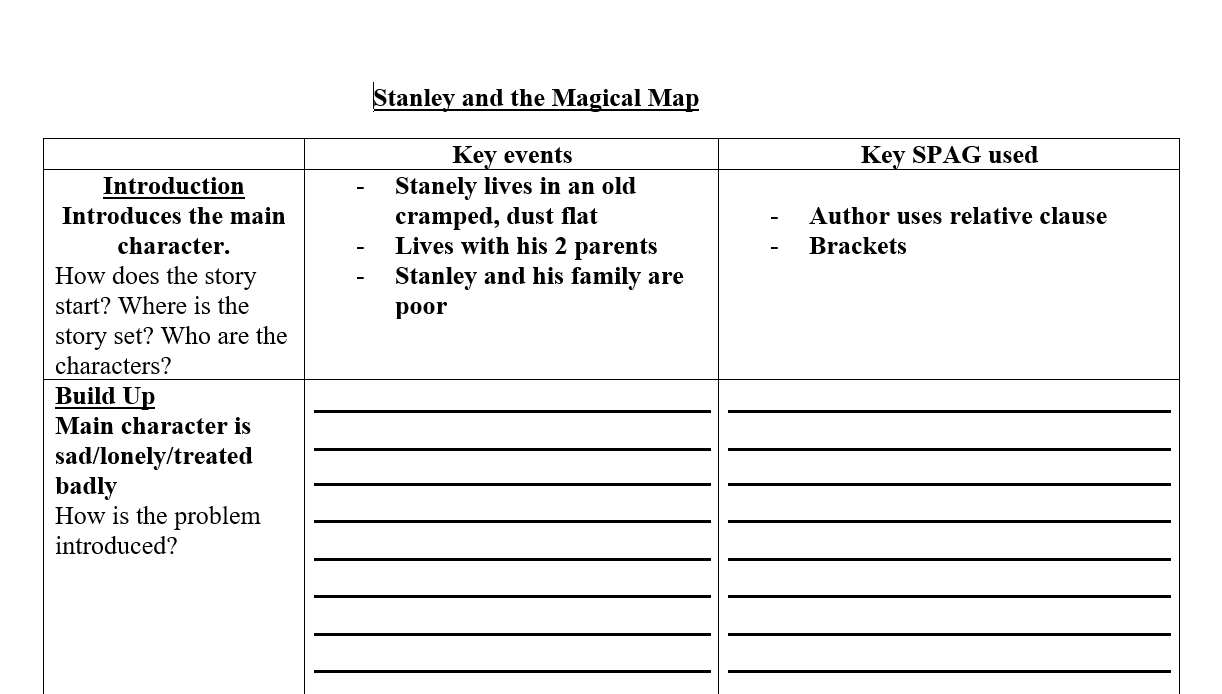
I've attached the tables in Word and PDF format. But, please feel free to draw your own tables and note down the important events in each section of the story.
So the question is... does Stanley and the Magical Map follow the generic "rags to riches" story outline?
Level 1 and Level 3 doucments
Hot off the press.. EW an excellent understanding of the plot structure!
More fabulous work! Very proud of you Year 6! You understand the plot structure of this story! (This will help next week when we write our own!)
-

DB- Excellent plot summary!
-

DB
-

XS- Super understanding of the plot!
-

XS
-

XS
-

HH- Great understanding of the plot! Thank you adult who helped in making the table too!
-

AT-
-

SS- Good summary of the ending.
-

SA- Great understanding of the plot! Well done!
-

SA
-

IL- Great understanding of the plot!
-

IL
-

AG-Great summary of the events! Super understanding of the plot!
-

AG
-

KP-WOW! You've completed level 3 and have completed it perfectly! Super work!
-

KP
-

OS- Good summary.
-

AT- Super work Avy! You've explained the problems clearly.


28.01.21 - Thursday
Task 1
We will now be creating a story map for “Stanley and the Magical Map.”
I can remember to:
I can retell the text.
I can create pictures and symbols for key words and phrases in the text.
I can create the same symbols for the same words.
I can organise and sequence my text map with clear arrows.
Remember to use the same symbols for the same words throughout the map!
For example, in my text map Stanley is the same throughout.
As well, any time adverbial, I just drew a clock.
* You do not need to write/draw every word. *
Be creative with colours and pictures!
I have included my example story map to help you! I can't wait to see yours!


Task 2
Now that we have made a story map, we can retell the text with actions too! A good way of learning how to write different text types is by retelling them with actions to help us remember.
A couple remember tos:
Read the story out loud.
Create actions for key words and phrases in the story.
Have fun!
Watch Miss Stephens retelling the text with her actions!
Year 6 Talk for writing story actions
Now, it's your turn!! Have fun, be creative and use the text maps to help you!!
You can send videos of your actions or you can also send in pictures! I'm looking forward to seeing yours!
If you're needing inspiration for actions... have a look at this document!
Y6 bubble's performance of 'Stanley's Magical Map' ...an introduction!
I am so proud of all of you Year 6! Great story maps and actions!! Thank you for sharing your actions with me!! They are giving me some inspiration! Well done all!!
-

RW- A fantastic story map!! I love it!
-

AT - A very detailed story map! I love it!
-

AT- Pefect!
-

AT- So perfect!
-

AT- Love these actions!
-

XS- Perfection! Love this story map!
-

AS- Great story map!
-

FS- Great story map!
-

SA- A detailed story map! Well done!
-

EW- You're so creative!
-

EW- Great actions!
-

EW- Love the actions! Looks fun!
-

EW- An amazing story map! Well done!
-

KP- A fantastic story map! Well done!
-

XS- Nicely done!
-

XS- Love these!
-

XS- Love these actions!
-

XS- Such a good idea!
-

XS- You're so creative with your actions!
-

IL- A fantastic story map! I love it!


29.01.21 - Friday
What are the settings in Stanley and the Magical Map? What makes a really good setting? How do writers create exciting and intriguing settings in their stories?
The two main settings in our story are a forest and a cramped flat (Stanley’s home).
week-beginning-25th-january-2021


Task 1
Have a listen to the videos below for a couple of minutes and gather thoughts about senses.
Now, depending on which type of forest you'd like to write about, this will change the mood of your word list and how the reader feels. (Examples: a spooky forest or a magical type of forest)
What can you hear?
What can you see?
What can you smell?
What can you touch?
What can you taste?
You can just write words down in a list or whatever works for you!
Dark Forest Ambience, Soundscape, Background Sounds, Crows, Owls
Dark night in the woods with crows and owls, sounds of dark forest ambience.
Forest setting
Can you write a detailed setting description of a forest?Think about the five sense: What can you see, hear, feel, smell and taste in this environment? Try t...
Task 2
Write your own setting description of a forest.
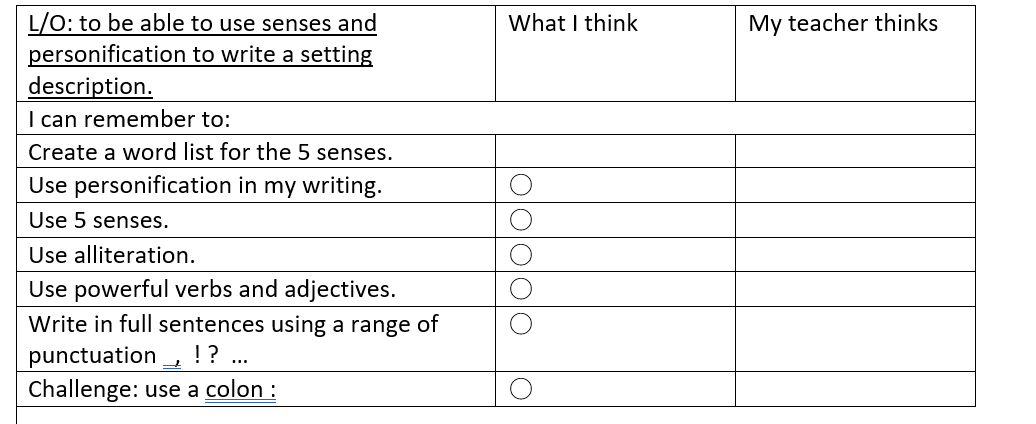
Miss I can't remember what alliteration and personification mean! Well have a read..


How do I start? That's usually the hardest part of writing! I'd advise to just start off by saying what you can see. Remember you can always edit after!
Miss how long does it have to be?
Well as I usually say it's quality over quantity. I'd rather have a short powerful paragraph than 3 pages of repeated sentences! Wouldn't you?
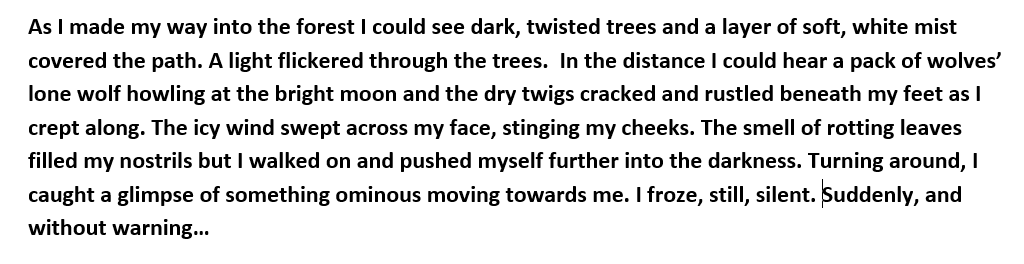
Miss Stephens' setting description. As you read it you will see that I went for a spooky, suspenseful type of setting!
Let's take a closer look at my example... Purple is personification I've used and green is the senses. (click to enlarge)


STUCK ON A WORD? USE A WORD MAT!
WOW!! Great writing from Year 6.. again!! Some of your writing has given me chills!!
-

AT-Great use of senses in your writing! Nice simile used as well! So creepy! Well done!
-

HH- Good use of personification, alliteration and your senses! I like that you made a list
-

IL-Good use of personification and your senses! I like how you personified the wind!
-

KP-Good use of senses and personification! Excellent use of punctuation!!!
-

AS- Good use of senses and personification in your writing! Well done!
-

SA- WOW!! Great use of senses and personification!! Gives me chills!
-

XS- This is fantastic!! Great use of senses and personification! Scary!!
-

XS- Great notes!!
-

RW- Great vocabulary used here! As well as senses and personification! Well done!


